Break the Tension: 1–3 Minute Stress Resets That Work
Break the Tension: Simple Ways to Calm Your Body, Clear Your Mind, and Regain Control of Your Day
Stress often shows up as tight shoulders, shallow breathing, racing thoughts, and a sense of being behind. A fast reset works best when it targets both the body and the schedule: calm the nervous system first, then reduce the pressure points that keep stress cycling back. The techniques below are designed as “micro-resets” that fit into real life—between meetings, during errands, or before sleep.
Recognize the early signs of building tension
Stress is easier to interrupt when it’s still “small.” The earlier you notice it, the less likely it is to snowball into snapping at someone, doom-scrolling, or shutting down.
Common body cues
- Jaw clenching, tight chest, headache, stomach fluttering
- Sweaty palms, restless legs, tense shoulders
Common mind cues
- Looping thoughts, irritability, decision fatigue
- Difficulty starting tasks, forgetting small things
Quick check-in (30 seconds)
Rate stress from 0–10. Then name one sensation in the body and one thought in the mind. This separates signals (“my chest feels tight”) from the story (“everything is going wrong”), which makes it easier to choose a helpful next step.
When to get extra support
If panic symptoms persist, sleep is disrupted most nights, or stress regularly interferes with work or relationships, consider talking with a licensed professional. For general education on stress and how it affects the body, the American Psychological Association is a solid starting point.
Breathing exercises that downshift stress in 1–3 minutes
Breath is one of the fastest levers for changing state. Keep it gentle—smooth and quiet beats big and forceful.
Physiological sigh (30–60 seconds)
Inhale through the nose, then “top off” with a second short inhale. Follow with a long, slow exhale. Repeat 2–5 cycles for a rapid downshift during sudden overwhelm.
Box breathing (2 minutes)
Inhale for 4, hold for 4, exhale for 4, hold for 4. Keep the breath controlled but comfortable. This is useful before a meeting, a call, or any moment that requires steadier focus.
Extended exhale (90 seconds)
Inhale for 4, exhale for 6–8. A longer exhale can reduce that “wired” feeling and help the chest and face soften.
Fast breathing options and when to use them
| Technique | Time needed | Best for | How it feels when it works |
|---|---|---|---|
| Physiological sigh | 30–60 sec | Sudden spike of stress or overwhelm | Shoulders drop, breath deepens, mind feels less urgent |
| Box breathing | 2 min | Steady anxiety, pre-meeting nerves | More control and steadier focus |
| Extended exhale | 90 sec | Irritability, tension in chest | Warmth/softening in chest and face |
Make it stick by pairing one method with a daily cue: opening your laptop, parking the car, washing your hands, or sitting down to dinner.
Quick meditations for busy moments (no special setup needed)
Meditation doesn’t have to mean candles and silence. The goal is a brief return to the present—especially when your mind is sprinting ahead.
- 60-second “name and release”: silently label what’s present (tightness, worry, pressure). On each exhale, say “release.”
- 2-minute sensory anchor: focus on one sound, one point of contact (feet on the floor), and one visual detail. When attention wanders, return to those anchors.
- 3-minute compassion reset: place a hand on your chest, breathe slowly, and repeat: “May I meet this moment with steadiness.”
If your mind feels too loud, do a breathing reset first, then shift into meditation once your body is calmer. For an overview of mindfulness and meditation approaches, see the National Center for Complementary and Integrative Health.
Grounding techniques that stop spirals and bring you back to the present
Grounding works well when stress turns into rumination—replaying conversations, imagining worst-case scenarios, or getting stuck in “should” thoughts.
- 5–4–3–2–1 method: name 5 things you see, 4 you feel, 3 you hear, 2 you smell, 1 you taste. Whispering it can make it more effective.
- Temperature grounding: hold a cool drink, splash cold water on your wrists, or step outside for fresh air. Sensory contrast can interrupt the loop.
- Muscle release scan: tense fists for 5 seconds, release for 10; then repeat through shoulders, legs, and face to unwind stored tension.
- Movement grounding: walk slowly for 2 minutes, counting steps or matching steps to exhales.
Time management tips that reduce stress at the source
Once your nervous system settles, take one practical step to reduce the pressure that keeps stress returning.
For more practical coping strategies, the CDC’s stress coping guide is a helpful reference.
A simple “Break the Tension” daily routine (morning, midday, evening)
Morning (2–4 minutes)
Midday (3 minutes)
Before a stressful task (60 seconds)
Evening (5 minutes)
Common obstacles and how to adjust
Tools that make these micro-resets easier to follow
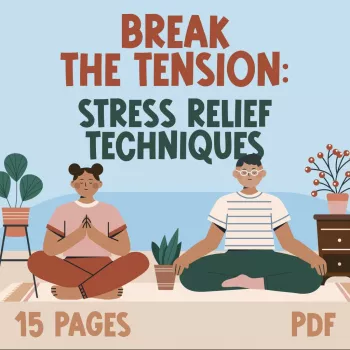
- Break the Tension: Stress Relief Techniques – Breathing Exercises, Quick Meditations, Grounding Techniques, and Time Management Tips to Reduce Stress (a structured, ready-to-use guide for fast resets and daily routines)
- Step-by-Step Career Development Guide – Professional Growth, Job Search, Networking & Resume Writing Ebook (helpful if work uncertainty and career decisions are a major stress driver)
- Homework Help Made Easy Toolkit for Parents – Printable Guide for Creating Study Habits, Homework Strategies & Independent Learning (useful for reducing evening chaos and last-minute homework stress at home)
FAQ
What are the 5 C’s of stress management?
A common version is Control (change what you can), Challenge (reframe the problem as manageable), Commitment (stick to small routines that help), Connection (lean on supportive people), and Care (protect sleep, nourishment, movement, and recovery). Variations exist, but the point is the same: calm your body, clarify what matters, and take one doable action.











Leave a comment