Smarter Decisions: Critical Thinking eBook (Digital)
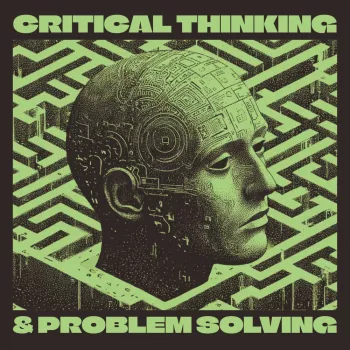
Critical Thinking & Problem Solving eBook: A Practical Digital Guide to Smarter Decisions
Clear thinking is a trainable skill—especially when life feels fast, messy, or emotionally charged. The Critical Thinking & Problem Solving eBook – Digital Download Guide for Smarter Decision Making, Brain Teasers & Life Skills Ebook is built for real-world decisions: how to evaluate information, spot weak reasoning, and choose better options when you don’t have perfect clarity. Instead of long lectures, it uses bite-sized lessons, brain teasers, and everyday scenarios so practice feels doable—and transferable to work, school, and daily life.
Critical thinking is commonly defined as purposeful, self-regulating judgment—evaluating evidence, reasoning carefully, and adjusting when new information shows up (see the APA’s overview of critical thinking). This guide turns that definition into routines you can actually use.
What this eBook helps build
- A repeatable approach for breaking down messy problems into manageable parts
- Stronger decision habits when information is incomplete or conflicting
- Better reasoning skills: distinguishing facts, assumptions, and opinions
- Pattern recognition and flexible thinking through brain teasers
- Communication and life skills: explaining choices clearly and handling disagreement constructively
Who benefits most from a critical thinking workbook style guide
- Students who want to improve reasoning for essays, projects, and tests
- Professionals making decisions with time, budget, or stakeholder constraints
- Parents and caregivers teaching practical life skills and judgment
- Anyone who enjoys logic puzzles and wants them to translate into real-world thinking
- People rebuilding confidence after decision fatigue or overwhelm
A simple problem-solving loop to practice daily
One of the fastest ways to build better judgment is to follow a consistent loop. Repetition matters more than intensity—especially when decisions come with pressure, uncertainty, or competing priorities.
- Define the problem precisely: What is happening, where, and for whom?
- Clarify the goal and constraints: Time, money, risk tolerance, and non-negotiables.
- Generate multiple options: Don’t stop at the first plausible answer.
- Evaluate evidence: Check sources, look for missing information, and test assumptions.
- Decide and act: Choose the best available option, not a perfect one.
- Review results: What worked, what didn’t, and what to change next time.
This loop pairs well with basic ideas from epistemology—how knowledge and justification work—because it trains you to separate what you know, what you’re inferring, and what you’re guessing (a helpful reference point: Stanford Encyclopedia of Philosophy: The Analysis of Knowledge).
Brain teasers that strengthen real-life thinking
Brain teasers aren’t just entertainment when they’re used as structured reps for the mind. The most useful puzzles create habits that carry over into everyday judgment.
- Logic puzzles build the discipline of stating premises and drawing valid conclusions.
- Lateral thinking prompts encourage alternative interpretations and creative options.
- Pattern-based teasers sharpen your ability to notice trends and anomalies in daily information.
- Probability and estimation exercises reduce overconfidence in “gut feel.”
- Short challenges make practice consistent—small reps add up over time.
That last point matters: shorter sessions reduce friction, so you actually keep showing up. Consistency is what turns “smart ideas” into default behavior.
Common thinking traps—and how to catch them
Even careful people get pulled off course by predictable mental shortcuts. Learning to label those traps makes it easier to pause, verify, and choose intentionally. For a deeper look at how bias affects decisions and measurement, the NIST/SEMATECH e-Handbook of Statistical Methods is a solid reference.
Quick guide: Traps and better moves
| Thinking trap | What it looks like | A practical counter-move |
|---|---|---|
| Confirmation bias | Only noticing evidence that supports a preferred answer | Write one reason the opposite could be true |
| Sunk cost fallacy | Continuing because time/money was already spent | Ask: “If starting today, would this still be the choice?” |
| False dilemma | Believing there are only two options | List 3–5 alternatives before committing |
| Anchoring | Overweighting the first number or idea heard | Estimate independently, then compare |
| Hindsight bias | Assuming outcomes were obvious after the fact | Record predictions in advance to calibrate judgment |
How to use the guide as a digital download
Digital formats work best when they’re frictionless: open, practice, apply, repeat. A simple routine keeps improvement steady without turning it into a chore.
- Set a schedule: 10–15 minutes, 3–5 days per week, for steady improvement.
- Keep a “decision journal” page: Note the choice, evidence, confidence, and outcome.
- Use puzzles as warm-ups: Then apply the same reasoning steps to a real problem.
- Try one technique per week: Assumptions check, pros/cons with weights, or a pre-mortem.
- Pair with stress-management: Decisions feel harder when urgency or emotions spike.
For days when tension is driving rushed choices, pairing the eBook with Break the Tension: Stress Relief Techniques can help you slow down long enough to think clearly.
When critical thinking improves everyday life skills
- Money decisions: Compare tradeoffs, spot hidden costs, and avoid impulse bias.
- Work and career: Prioritize tasks, diagnose recurring issues, and handle feedback rationally.
- Relationships: Clarify misunderstandings, ask better questions, and reduce reactive assumptions.
- Media literacy: Evaluate claims, detect misleading statistics, and recognize emotional framing.
- Health choices: Separate anecdotes from evidence and understand uncertainty.
Related digital tools that pair well
- Stress relief support: Break the Tension: Stress Relief Techniques for breathing, grounding, and time management when pressure is high.
- Study habit structure for students: Homework Help Made Easy Toolkit for Parents to reinforce consistent routines that make reasoning skills easier to apply.
Get the Critical Thinking & Problem Solving eBook (digital download)
- Digital format for quick access and repeat practice
- Designed for practical decision-making, puzzles, and everyday scenarios
- Useful for self-study, classroom support, or personal development routines
Shop the Critical Thinking & Problem Solving eBook (Digital Download)
FAQ
What are critical thinking problems?
Critical thinking problems are scenarios where you have to analyze information, identify assumptions, evaluate evidence quality, and choose a conclusion you can justify—even when details are uncertain or priorities compete.









Leave a comment