Talk & Connect: Parent-Child Workbook for Stronger Bonds

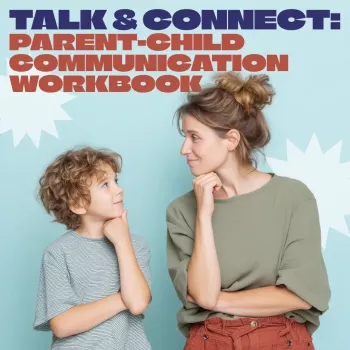
Talk & Connect: A Parent-Child Communication Workbook for Stronger Bonds
Busy schedules, big emotions, and constant interruptions can make family connection feel like something you “get to” after everything else is handled. The problem is that kids don’t wait for perfect timing—feelings spill out in the car, during homework, or five minutes before bedtime. A parent-child communication workbook creates a simple, repeatable way to talk without turning every moment into a lecture, a debate, or a “serious talk.” Over time, that routine helps children feel safer, more understood, and more willing to open up.
Why communication breaks down at home (and why it’s normal)
Most families don’t struggle because they don’t care; they struggle because life is loud. Transitions (school to home, weekends to weekdays), stress, and screens can shrink the space for calm conversation. When there’s no buffer, small miscommunications can escalate quickly.
Kids also communicate indirectly when emotions feel too big. A slammed door, sudden sarcasm, or “fine” can be a child’s way of saying, “I don’t know how to explain this,” or “I’m not sure it’s safe to share.” Meanwhile, parents often default to fixing—teaching, correcting, problem-solving—because it’s practical and well-intended. But when a child wants connection first, “solutions” can feel like dismissal.
What matters most isn’t flawless communication; it’s repair. Small reconnecting moments—owning a sharp tone, validating a feeling, trying again—build trust and emotional safety more than any perfect script.
What a communication workbook adds that “just talk more” doesn’t
“Talk more” is vague, and vagueness creates pressure. A workbook reduces the guesswork with ready-to-use conversation starters, reflection pages, and light routines that don’t require you to invent the right words while tired or stressed.
Structure is surprisingly calming. A predictable format helps kids who worry about getting in trouble and helps parents who don’t want to accidentally turn a chat into an interrogation. The best workbooks balance listening and sharing, so your child doesn’t feel pinned down by question after question—and you don’t end up delivering a monologue.
Another overlooked benefit: tracking patterns. When you use the same tools over time, you start noticing what builds closeness (humor, storytelling, empathy) and what sparks conflict (timing, tone, certain topics). That awareness makes future conversations easier.
The Talk & Connect workbook at a glance
Talk & Connect: Parent-Child Communication Workbook is designed to support positive parenting through guided conversation starters, emotional check-ins, and practical pages that fit real family life. It can be used for everyday bonding, after a conflict to reconnect, or to build a steady habit of communication.
Short sessions work well—often 5–15 minutes is enough to soften the mood of the day. Consistency matters more than intensity; a few touchpoints each week typically beats occasional long “big talks.”
Quick snapshot: who it helps and when to use it
| Situation | What to try | What it builds |
|---|---|---|
| After school meltdowns | 1 emotion check-in + 1 low-pressure question | Co-regulation and trust |
| Sibling conflict | Repair questions and a fair “next time” plan | Problem-solving and accountability |
| Bedtime resistance | Short connection ritual before lights out | Security and openness |
| Hard topics (friends, school, worries) | Gentle questions + reflective listening | Emotional vocabulary and honesty |
How to use conversation starters without making kids shut down
The goal is connection, not a perfect answer. Start with easy wins: playful, imaginative, or neutral questions help your child relax before you try anything deeper. If you jump straight to heavy topics, some kids will clamp down quickly.
Choices reduce resistance. Try: “Want a quick question or a longer one?” or “Do you want to talk now or after dinner?” That small control can turn a “no” into a “maybe.”
Reflective listening is the shortcut to feeling heard. Mirror the emotion before the follow-up: “That sounds frustrating,” or “You were excited and then it changed.” Once a child feels understood, they’re more likely to add detail.
In heated moments, skip “why.” “Why did you do that?” can sound like a courtroom. Instead, use “what happened” and “what did you feel.” You’ll get clearer information and fewer power struggles.
End with something small and positive: appreciation, a simple plan, or a calming activity. Closing well teaches the nervous system that talking together is safe.
A simple weekly routine for stronger family bonds
A workbook works best when it’s part of a routine you can actually repeat. Keep it short, predictable, and forgiving.
If stress is the biggest barrier, pairing your communication routine with quick regulation tools can help. Break the Tension: Stress Relief Techniques can support calmer transitions, making it easier to stay present during conversations.
Common challenges and quick fixes
For school-night friction that blocks connection, a practical support tool can reduce conflict points. Homework Help Made Easy Toolkit for Parents can help create steadier homework routines, leaving more energy for relationship-building conversations.
When a workbook is enough—and when extra support helps
For trusted, research-informed parenting guidance, visit the CDC Essentials for Parenting, the American Psychological Association on positive parenting, or the Child Mind Institute parenting resources.
FAQ
What is the best parent communication app?
The best app depends on your goal: co-parent scheduling and messaging apps are great for logistics, while connection-focused tools are better for conversation ideas. For deeper emotional connection, face-to-face routines (like a workbook-based check-in) often work better than any screen-based solution.











Leave a comment