Critical Thinking Problems: Types, Examples, and Tips
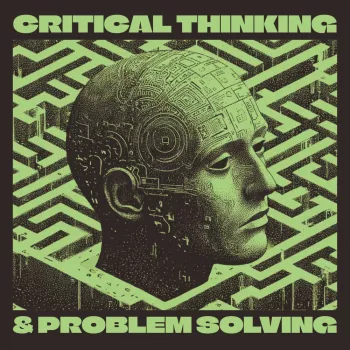
What are critical thinking problems?
Critical thinking problems are situations that require more than a quick answer or a gut reaction. They push you to interpret information, question assumptions, evaluate evidence, and choose the most reasonable conclusion. Unlike routine tasks with a single obvious solution, these problems often involve uncertainty, incomplete data, competing priorities, or misleading inputs.
How critical thinking problems show up in everyday decisions
Many real-world choices are critical thinking problems because the “right” move depends on context. For example, comparing two products with mixed reviews, deciding whether a limited-time deal is actually a good value, or choosing between speed and quality on a project all require weighing tradeoffs. The challenge isn’t just picking an option—it’s deciding which criteria matter most and how much trust to place in each source of information.
Common types of critical thinking problems
Critical thinking problems often fall into a few patterns:
- Evidence-based judgment: Sorting strong evidence from weak evidence, such as distinguishing verified facts from opinions or marketing claims.
- Cause-and-effect analysis: Figuring out why something happened when multiple factors could be involved.
- Decision under constraints: Choosing the best option when time, budget, or resources are limited.
- Problem framing: Defining the real problem (not just the symptom) so you don’t solve the wrong issue.
What makes these problems “critical”
They’re “critical” because poor reasoning can lead to costly mistakes—financially, professionally, or personally. These problems also tend to trigger cognitive biases, like confirmation bias (favoring information that supports what you already think) or anchoring (overweighting the first number you see). A critical thinking approach slows the process down just enough to test conclusions before acting.
How to approach critical thinking problems more effectively
A practical approach is to (1) clarify the goal, (2) list what you know versus what you’re assuming, (3) check the quality of sources, (4) consider alternatives, and (5) decide using clear criteria. For a more structured, step-by-step method you can apply to everyday choices, visit this critical thinking and problem-solving guide.
FAQ
What is the difference between critical thinking and problem solving?
Critical thinking focuses on evaluating information and reasoning well, while problem solving focuses on taking action to reach a goal. In practice, strong solutions usually depend on strong critical thinking first.











Leave a comment